


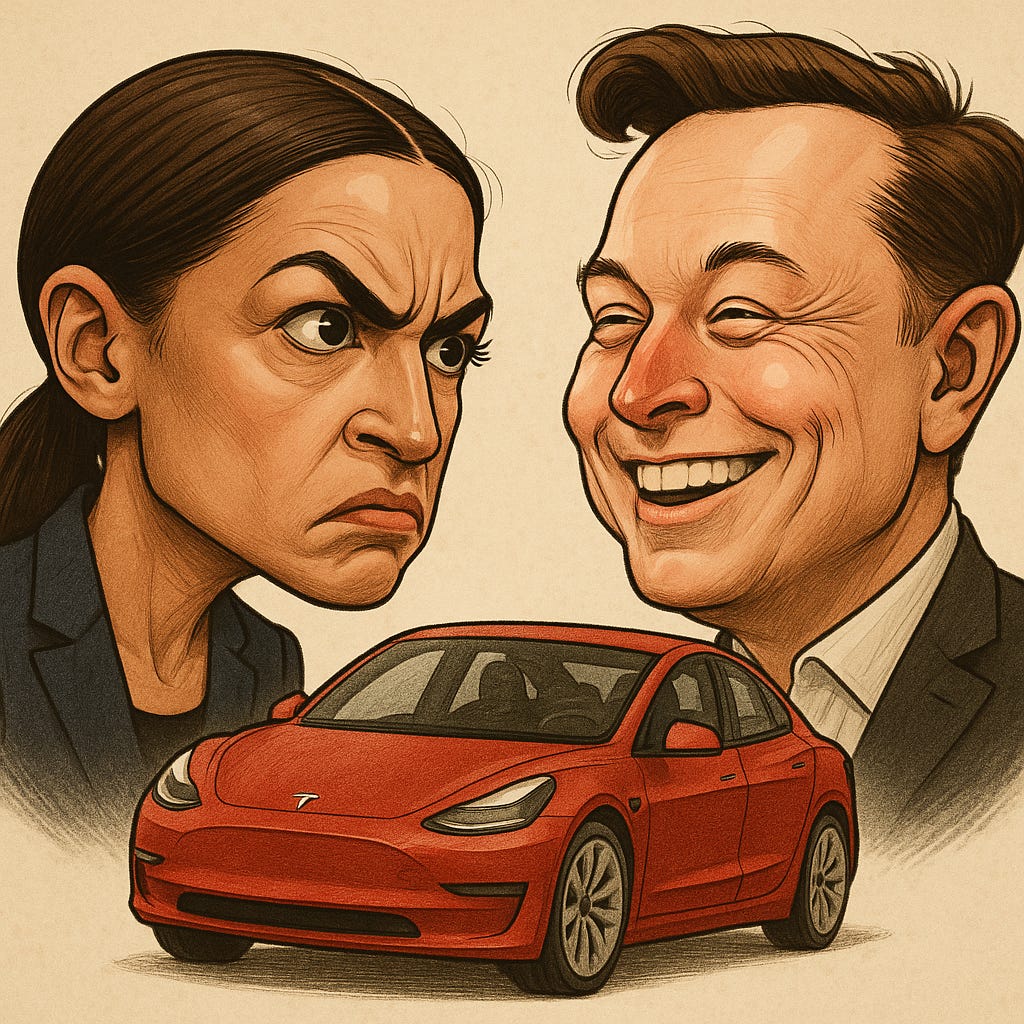
A very long time ago—before pronouns, before TikTok, even before Whole Foods—a hunter returned to his cave with a Woolly Mammoth in tow and blood smeared on his forehead. It wasn’t for camouflage. It was to advertise, he was the Man.
And just like that, virtue signaling was born.
Since then, humanity has expanded its repertoire. We’ve swapped blood and mammoth hides for clothes, medals, bumper stickers, LinkedIn updates, and Instagram bios. What hasn’t changed is the impulse: “Look at me. I’m better than you.”
Today’s vehicles are merely the latest edition of the same ancient instinct. They just come with Bluetooth.
Marketers figured this out early. Cars do more than move us—they sort us. The make, model, and finish you pick says something. Not just about what you drive, but about who you are.
Take Subaru, for example. In the 1990s, Subaru quietly pivoted—less horsepower, more cultural horsepower. Without fanfare, Subaru began placing subtle nods to lesbian culture in its ads. It never said the word out loud (and didn’t need to). Lesbians picked up the signal, and they’ve stayed loyal customers ever since. (See: https://www.theatlantic.com/business/archive/2016/06/how-subarus-came-to-be-seen-as-cars-for-lesbians/488042/ )
Fast-forward to the Tesla era.
If Subaru is stealth signaling, Tesla is the equivalent of a pride parade riding a Bitcoin bull. Elon Musk doesn’t do subtle. And yet, the early Tesla buyer had a few clear boxes to check:
✅ Tech Savvy
✅ Climate Conscious
✅ Casually Affluent
The car was sleek, the software was new, and the vibe was distinctly coastal—bicoastal, to be specific. Alexandria Ocasio-Cortez had one. So did Adam Schiff. Climate guilt? Assuaged. Luxury status? Secured. The only hiccup for the Left was that Teslas weren’t union-made. But faced with a choice between climate correctness and “the workers,” AOC chose to go green. Essentially sums up the priorities of today’s progressives.
But here’s the twist. Cars, unlike hats or hashtags, don’t change with the season. You’re stuck with one for years. So when Elon Musk made his not-so-subtle ideological pivot (Dogecoin tweets, anti-woke rants, boisterous MAGA cheerleading), it left Tesla’s early adopters in a bind.
Because if you’re a progressive with a Tesla in your garage, you’re now driving around in the equivalent of a red hat—just with better aerodynamics.
It’s the same identity whiplash that hit Bud Light.
Once the go-to beer of suburban backyard masculinity, Bud Light found itself center stage in a culture war after a brief partnership with transgender influencer Dylan Mulvaney. The campaign wasn’t even a full ad—just a branded can and an Instagram video. But it was enough to trigger a collective identity crisis among its most performatively macho consumers.
Pity the guy who just wanted a cold one and ended up in the wrong side of a Newsmax segment. Many switched to Modelo, Coors Light, or whatever beverage still felt “safe” from narrative shifts. That’s the dilemma for brand-loyal consumers today: You don’t just buy a product—you buy its politics, its vibe, its signal. And when the signal changes, you’re left stranded. With a six-pack. Or a $60,000 electric car.
It gets worse. EVs, it turns out, don’t hold their value. There’s no thriving used market. No easy off-ramp. Teslas can depreciate more rapidly than other vehicles, especially due to factors like frequent price changes and evolving technology. The rapid pace of innovation in the EV market can make older Teslas feel less desirable quickly, affecting their resale value. That sleek car in your driveway is aging into a paperweight with a lithium-ion battery.
So, feel free to give Alexandria Ocasio-Cortez a call. She’s looking to unload her Tesla at a reasonable price. And she wants to continue following Bernie Sanders’ lead and get a Subaru Forester.
(And, no, I didn’t make that up either, see: https://www.detroitnews.com/story/news/politics/2020/03/04/presidential-candidates-car-choices-make-statement/4863616002/ )
